Multi-format access control reader: when to choose the AGRG AXI-2

Compatibility with common card types, protected sector reading, artificial stone enclosures, and operation within existing systems
Overview

Multi-format reader in the AGRG lineup

AGRG AXI-2 is a multi-format access card reader from the AGRG line: a compact wall-mounted device in an artificial-stone enclosure with a Wiegand interface and status light indication on the front face. It works with virtually all common credential families — from 125 kHz EM-Marine, HID, and Indala cards to secure MIFARE DESFire and MIFARE Plus up to the SL3 security level — as well as Dallas Touch Memory (DS1990A) contact keys.

Multi-format support is the key difference between the AXI-2 and the base models. At a site where badges were issued at different times by different contractors, a single reader type covers every access point: users do not need to replace their cards, and the integrator does not need to match hardware to each format.

Within the Seenaptec Access Platform infrastructure, the AXI-2 serves as the field input for credentials: over Wiegand it connects to AGRG addressable access gateways serviced by the OSDP line, while the access decision is made by the platform's server-side logic.

Formats

Compatibility with widely used cards

The reader works with cards in two frequency bands and with contact keys. For each family, either reading of the unique identifier (UID) or reading of a protected memory area — the secure format — is supported:

Card familyStandard / frequencyWhat AXI-2 reads
EM-Marine125 kHzUID
HID125 kHzUID
Indala (Motorola)125 kHzUID
MIFARE Mini, MIFARE ClassicISO/IEC 14443A, 13.56 MHzUID and protected area
MIFARE Plus SL1/SL3ISO/IEC 14443A, 13.56 MHzUID and protected area, up to SL3
MIFARE DESFireISO/IEC 14443A, 13.56 MHzUID and protected area
Mifare ID13.56 MHzUID and protected sectors of working cards
I-CODEISO 15693, 13.56 MHzUID
Dallas TM (DS1990A)contact iButtonkey code

The output code format is configured for the controller: Wiegand W-26, W-34, W-37, W-40, W-42, and W-58 are available, and in sector mode — up to W-64. This covers most gateways and panels, including legacy controllers with a fixed 26-bit format.

The practical meaning of the table: if a site uses cards from several families, AXI-2 removes the compatibility question at the access-point level. The operator registers the identifier code in the "Identifiers" panel and links it to a person — regardless of which medium it was read from.

Protection

Secure formats: sectors, keys, and the transmission channel

UID is the factory or issuance number of a card that is read without authentication. For 125-kilohertz cards and open UIDs of the MIFARE family it is vulnerable to cloning: a duplicate can be produced by a consumer-grade emulator in seconds. That is why at critical access points AXI-2 is used to read the protected memory area of the card: access to the sector is performed with a secret 16-byte AES-128 key, and the system receives the contents of the protected sector, which cannot be reproduced without knowing the key.

The highest supported level is MIFARE Plus SL3, where the card and reader authenticate via AES and known attacks on Crypto1 become meaningless. This approach makes it possible to issue custom card batches with keys unique to a site or customer: a "foreign" card with the same UID simply will not be recognized as valid.

In Seenaptec Access Platform, card keys are stored in the protected secrets store of the "Security" workspace: a secret's value cannot be read back, it can only be replaced. From the gateway to the server the identifier travels over the OSDP line, for which Secure Channel is enabled — up to a fully encrypted mode with automatic key rotation — and on AGRG devices a "secure channel only" setting is available that prohibits unencrypted communication.

Housing

Enclosure options and versions

The AXI-2 housing is made of engineered stone — a composite based on acrylic resins (methyl methacrylate and polymethyl methacrylate) with aluminum hydroxide and mineral fillers. The material resists scratches and abrasion, and looks and feels like decorative stone rather than a utilitarian plastic box.

The standard version is available in three colors — black, white, and orange. Customization is available on request: color, texture, material, and logo application based on customer-provided designs. Manufacturing takes place in Russia.

Dimensions are 83.5 × 38 × 11 mm at a weight of 60 g: the reader is smaller than a standard light switch and does not clash with designer finishes. Surface mounting uses the mounting plate included in the delivery package, with a 50 cm ribbon cable. The IP54 protection rating and operating temperatures from −40 to +50 °C allow installation in unheated rooms and on exterior walls under a canopy. The read range is 1–2 cm, providing a predictable activation zone. Power supply is 9–15 V DC with average consumption up to 50 mA; the red and green indicator channels and the audible signal are brought out on separate wires and controlled by the controller.

Selection

When AXI-2 is the right choice

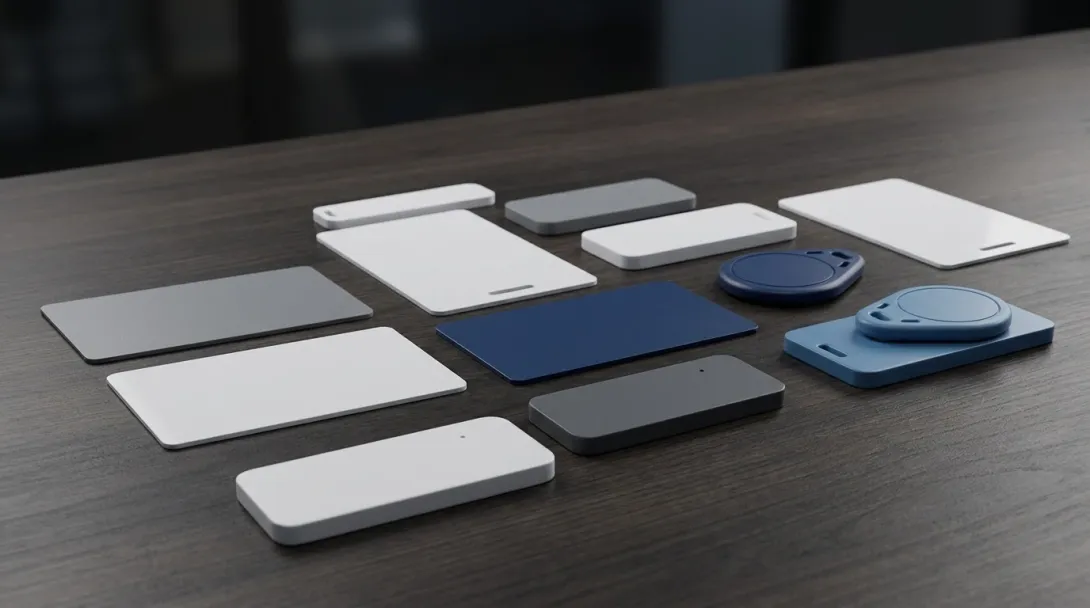
Various access cards and key fobs of several formats on a table
Mixed fleet

Different card types at a single site

EM-Marine from one contractor, HID from another, MIFARE issued to new employees: the AXI-2 reads all of these card families, so access points are unified without replacing already-issued credentials.
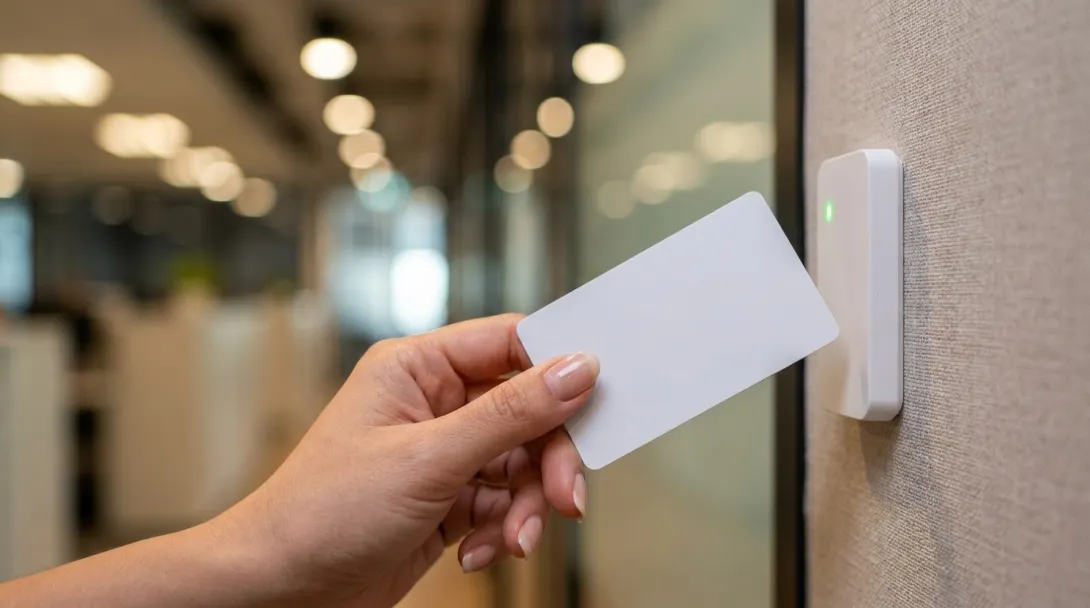
An employee holds a contactless card up to a wall-mounted reader
Migration

Phased transition to secure cards

Legacy 125 kHz cards continue to work while the database is migrated to MIFARE DESFire or MIFARE Plus SL3: newly issued cards are read from protected sectors on the same readers.
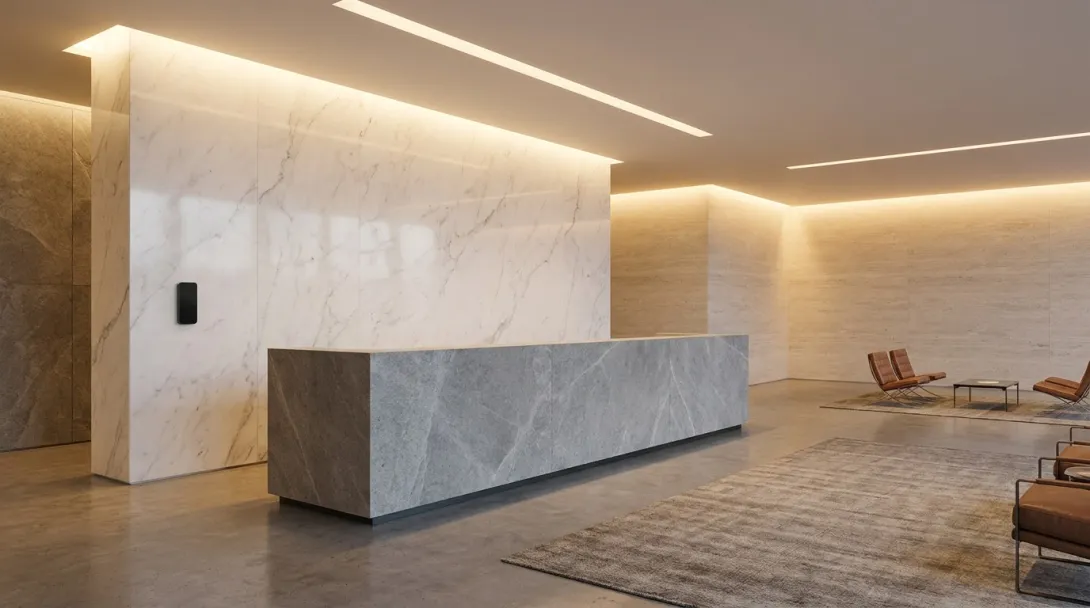
Elegant access card reader mounted on a stone wall in a prestigious lobby
Interior

VIP areas

An artificial-stone housing and dimensions smaller than a light switch make it a fit for banks, corporate headquarters, museums, and residences, where the appearance of equipment is part of the system requirements.
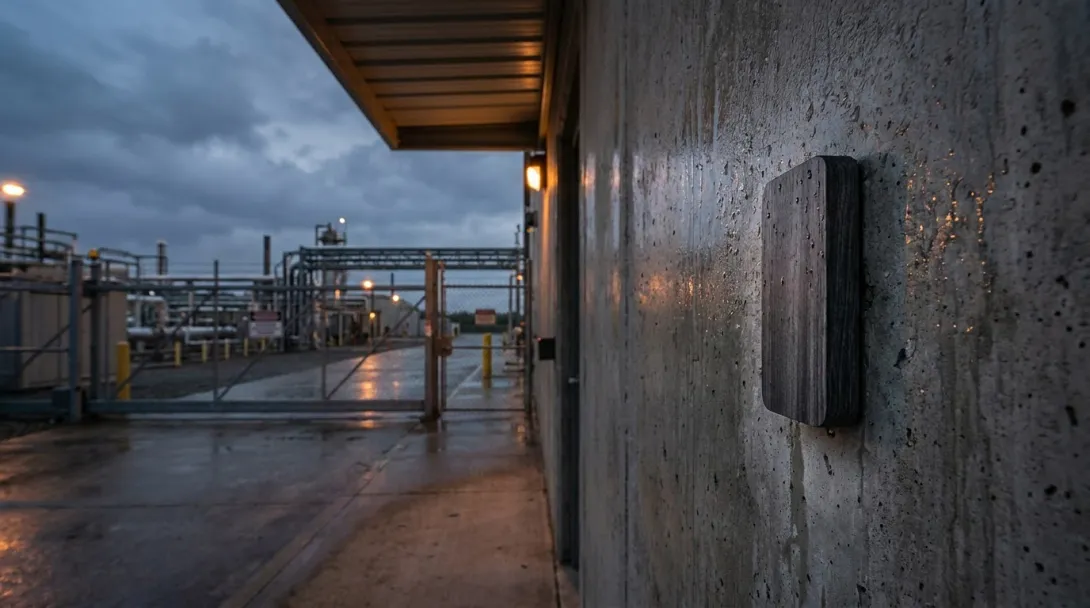
Access card reader on the exterior wall of an industrial facility under a canopy
Climate

Points with challenging conditions

IP54 rating and a −40 to +50 °C operating range allow AXI-2 to be installed at warehouse and parking entrances, in unheated vestibules, and on outdoor walls under a canopy.
Lineup

AXI-2 in the AGRG reader lineup

01.
AXI-1

An economical option for MIFARE

Reads the UID of ISO/IEC 14443A cards (MIFARE Mini, Classic, Plus, DESFire) and TM keys, outputting the code in W-26/34/58 formats. A sensible choice for a uniform card fleet without protected sectors — the same compact housing at a lower price.
02.
AXI-2

Multi-Format and Protected Sectors

All 125 kHz and 13.56 MHz families, Dallas TM keys, protected-area reading via AES-128 up to SL3, Wiegand up to W-64 in sector mode. A universal option for mixed and migrating systems.
03.
AXI-3

Onboard touch button

MIFARE UID reading plus a built-in touch exit button — two devices in a single, slightly larger housing. Dallas Touch Memory emulation mode provides compatibility with Bolid S2000-2 and S2000-4 controllers.
Platform

Application in a live access control system on the Seenaptec platform

In a system built on Seenaptec Access Platform, the reader connects via Wiegand to an AGRG access gateway, and the gateways register on the OSDP line through automated Seenaptec SecureBus discovery: detection by serial number, address assignment, and baud-rate negotiation are performed without manual enumeration. Up to 64 devices are allowed on a single line; for critical areas, the line is backed up by a second communication loop.

The "reader" component is bound to a slot on the access point — a door, turnstile, or cabinet — after which the point is governed by the object's rules. The server makes the decision, so replacing a card or adding a new format affects only the badge office: rights, schedules, and bindings do not depend on the credential. The "card + PIN" identification modes and escorted access are configured on the object wherever hardware with code entry is installed.

For a large fleet, named AGRG hardware-settings templates are convenient: read profiles and the "secure channel only" mode are saved into a template and applied during SSB discovery, from the device card, or as a bulk operation on a group of devices of the same model. During installation, the "Commissioning (LIVE)" mode helps: a card presentation immediately appears in the event feed with the actually read code — this verifies both the credential format and signal delivery to the server.

In operation, the last read code and component status are visible in the device card under the "Diagnostics" section, and firmware is updated from the web interface with checksum and version verification. If a gateway fails, the configuration record retains the bindings to objects: the new unit is accepted by a passport revision, and a key is set for it for the secure channel. The scenario for migrating a live Wiegand system to a platform with protected card issuance is described in the Seenaptec 1.6.1 release article.