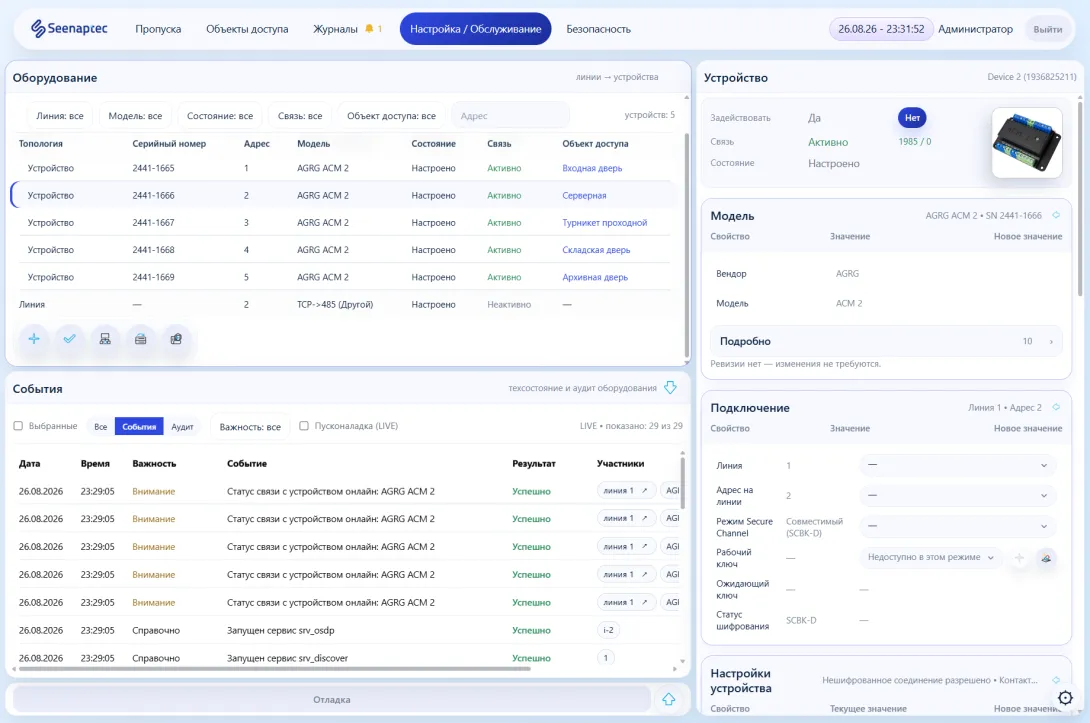
A traditional access control system is built around physical entry points and hardware controllers. Depending on the architecture, some settings and decisions are handled directly on the controllers, which complicates the maintenance of a distributed infrastructure.
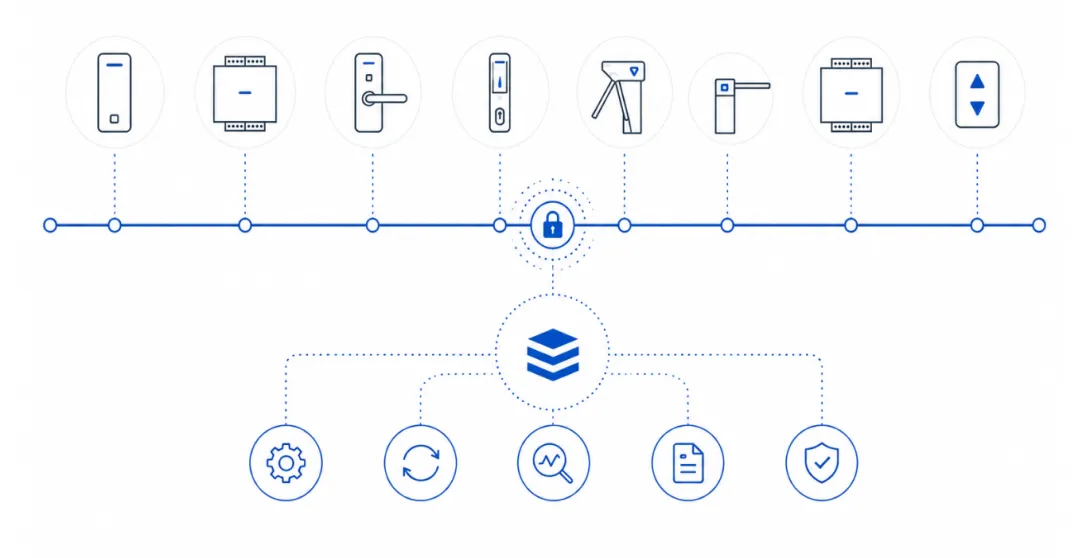
Seenaptec offers a different model. The core access control logic runs in software on the server, while the connected equipment is used to identify people, operate locks, and collect events.
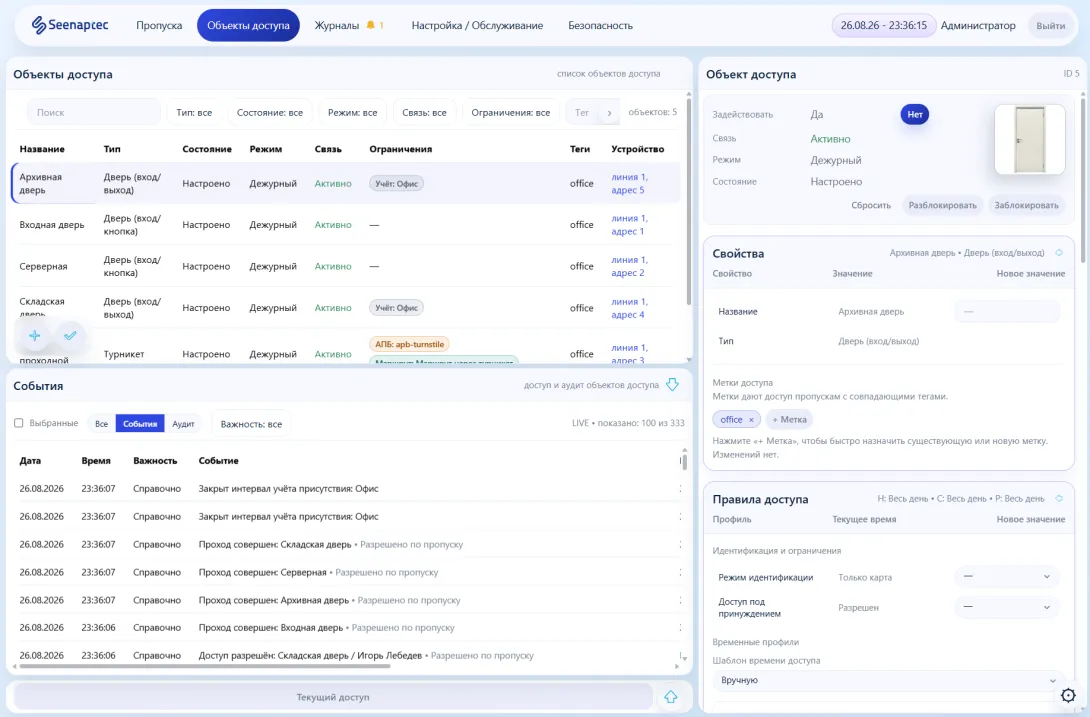
The administrator works not with a set of individual devices, but with access objects: doors, rooms, turnstiles, server racks, utility cabinets, and secured areas.
For each object, you can define who has access rights, when access is permitted, what conditions must be met, and which events must be logged.
Where the system is used
Offices and enterprises. Managing employee and visitor entry, badges, schedules, and access control for office and technical rooms.
Data centers. Access to server rooms and machine halls, monitoring rack openings and the duration of work with equipment.
Energy sector. Managing physical access to substation premises, electrical and process cabinets, and automation equipment.
Telecommunications. Protecting communication nodes, base stations, telecom cabinets, and distributed technical sites.
Industry and transport. Monitoring process zones, production facilities, checkpoints, turnstiles, and equipment.